
Powering India’s Solarisation Drive: Dr Vivek Bindra’s Bada Business Investee Luno Solar Announces a High-Capacity Manufacturing Expansion
Specials
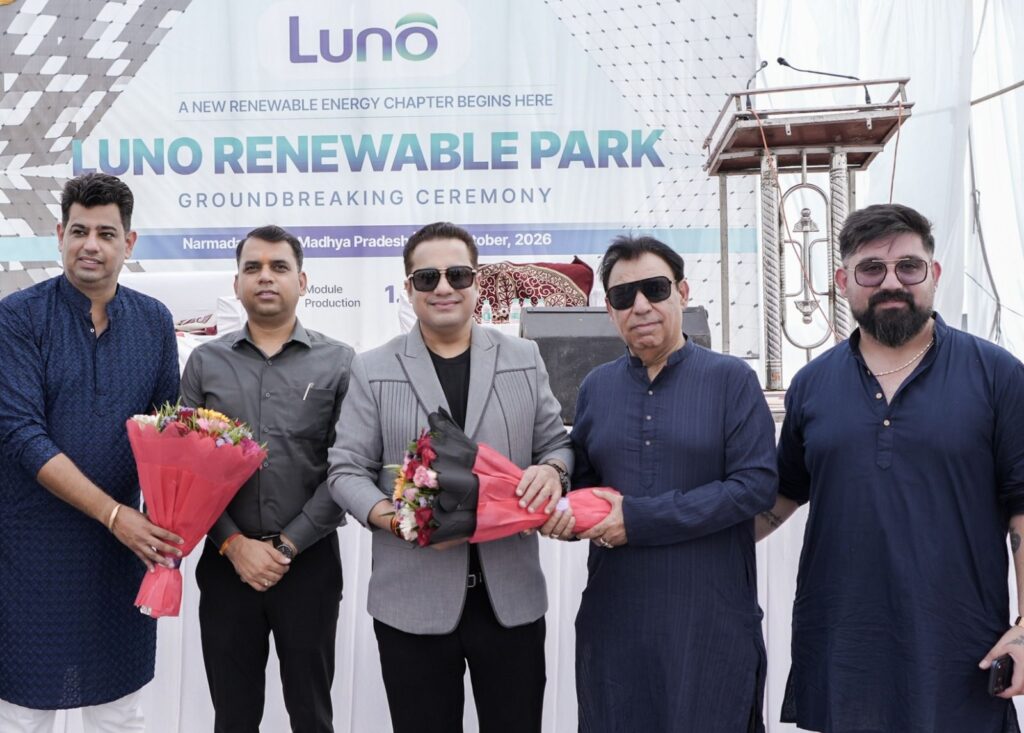
Narmadapuram [Madhya Pradesh, India], October 13: Luno Solar, an investee company of Bada Business associated with entrepreneur and investor Dr Vivek Bindra, is planning a major manufacturing expansion to support India’s growing solar-energy ecosystem. The company marked the groundbreaking of its proposed Luno Renewable Park on 12 October 2026 at the Mohasa-Babai Industrial Area in Narmadapuram, Madhya Pradesh. The planned 45-acre facility will combine solar-cell and module manufacturing with inverter and battery-storage production.
Luno Solar’s association with Bada Business’s Idea to IPO initiative provides an additional business perspective to its expansion plans. As India’s solar capacity continues to grow, the company’s proposed investment in cell, module, inverter and battery storage manufacturing highlights how the growth of individual enterprises can contribute to the wider development of the domestic clean-energy supply chain.
Manufacturing capacity behind the solar transition
India’s expanding solar sector requires not only new installations but also a dependable supply of the equipment and components that make them possible. According to figures cited in Luno’s media talking points, India’s installed solar capacity crossed 168 GW by the end of August 2026, while nearly 34.45 GW was added in the first eight months of the year. The country’s broader ambition is to reach 500 GW of non-fossil-fuel capacity by 2030.
Luno’s proposed park is intended to contribute to the manufacturing side of this transition. It includes 2.4 GW of solar-cell capacity using TOPCon technology, 2.4 GW of solar-module capacity, 1.2 GW of inverter capacity and 1.2 GW of battery energy storage system capacity.
The company estimates that the module line could produce approximately 3,500 modules per day, or 12.6 lakh modules annually, during the first phase. The proposed module facility will operate alongside the cell line, giving Luno planned capabilities across two important stages of solar manufacturing.
Connecting solar generation with storage
The planned inclusion of battery energy storage reflects another requirement of the clean-energy transition. Solar generation varies with sunlight, while storage systems can help retain electricity for use at a later time. Luno’s proposed BESS manufacturing line is intended to complement its solar production plans.
The company expects module manufacturing to begin within three months of the groundbreaking, with the first batch of cells targeted within nine months, subject to project execution.
“India’s solar ambitions require a strong manufacturing ecosystem behind the installations. Domestic production of cells, modules and supporting equipment, alongside storage capabilities, can contribute to a more dependable clean-energy supply chain,” said Dr Vivek Bindra, entrepreneur and investor.
The Renewable Park remains under development. Its proposed capacities align with the wider national priorities of expanding renewable energy and strengthening domestic manufacturing through initiatives such as Make in India and Atmanirbhar Bharat.
Source: www.ahmedabadmirror.com